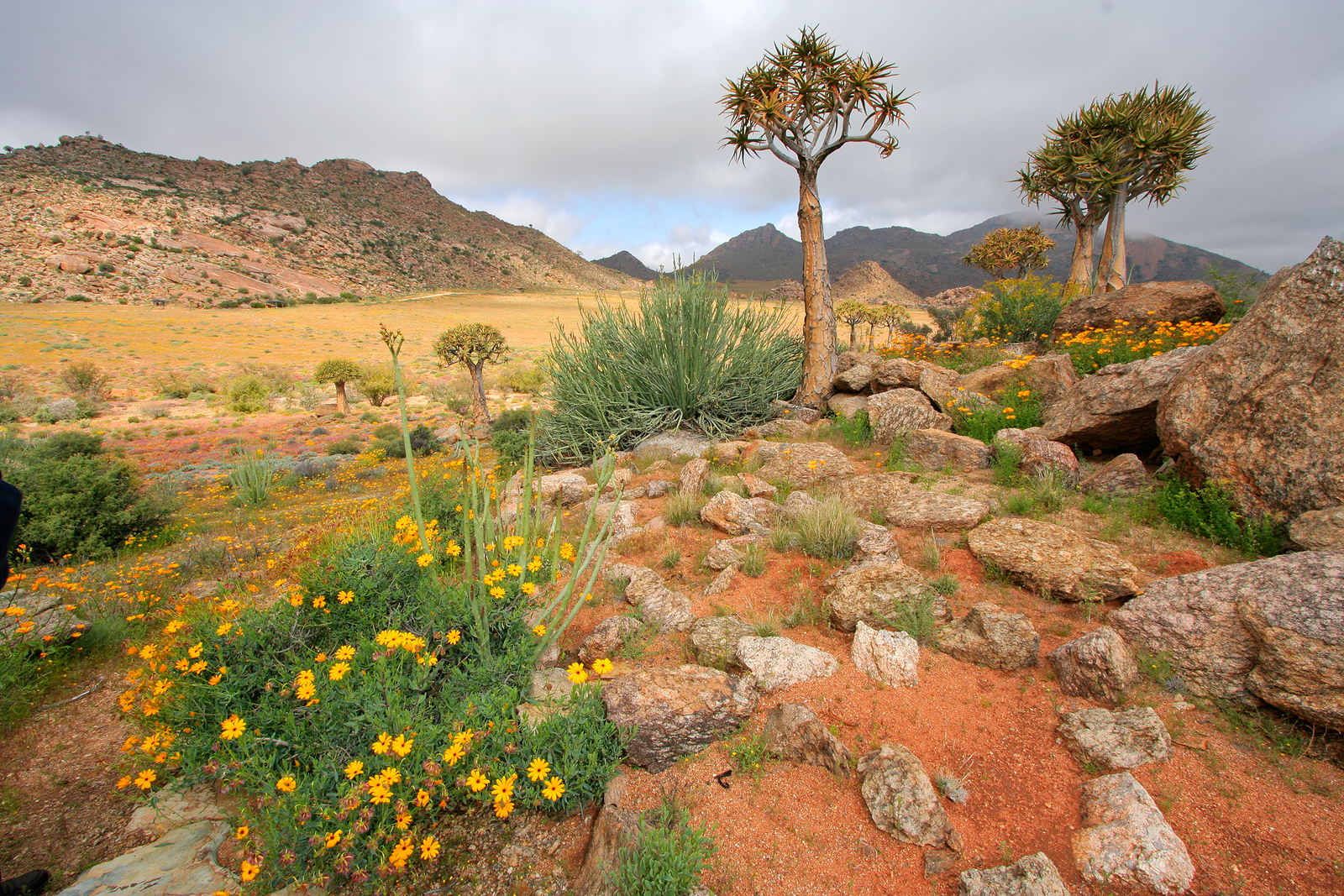
Every year between late July and September, a stretch of semi-desert in South Africa’s Northern Cape transforms into one of the most spectacular wildflower displays on earth. Namaqualand covers roughly 48,000 square kilometres and for most of the year it is a dry, rocky landscape. After good winter rains, it erupts in colour, with millions of daisies, succulents, and indigenous flowers blanketing the hillsides and roadsides from horizon to horizon.
It is a genuinely seasonal event and it only happens once a year. Getting there requires a car. There is no practical way to experience the flower season without one, because the best displays are spread across remote hillsides and gravel road detours that public transport simply does not reach. A self-drive from Cape Town with a rental from SANI SIXT is the most flexible and most rewarding way to do it.
When to go
The flower season in Namaqualand typically runs from late July through to mid-September, with the peak display usually falling in August. The exact timing and intensity of the display depends on winter rainfall, which varies from year to year. In a good rain year the flowers are extraordinary. In a dry year the display is more patchy but still worth the drive.
A few things that affect the display are worth knowing before you plan your trip. The flowers open in direct sunlight and close in overcast or cool conditions, which means morning visits on clear days give the best results. The flowers also tend to face the sun, so driving with the sun behind you gives a better view than driving into it. The N7 corridor and the areas around Springbok and Kamieskroon are generally the most reliable for a strong display.
Key stops on the route from Cape Town
01.
Vanrhynsdorp: About 300 kilometres north of Cape Town on the N7, Vanrhynsdorp sits at the foot of the Vanrhyns Pass and is often the first town where the flower display becomes noticeable. It is a practical overnight stop on the way north and a good place to check in with locals about where the best displays are that season. The succulents in the area around Vanrhynsdorp are particularly varied and include species found nowhere else in the world.
02.
Kamieskroon: A small village about 560 kilometres from Cape Town that sits at the centre of one of the most consistently reliable flower areas in the entire region. The hills around Kamieskroon and the Skilpad section of the Namaqua National Park nearby are among the best places in South Africa to see the flower display at its most intense. Accommodation books out early in a good flower year, so plan well in advance.
03.
Springbok: The largest town in Namaqualand and roughly 550 kilometres from Cape Town, Springbok is the natural base for exploring the wider region. The surrounding area includes the Goegap Nature Reserve, which has a dedicated wildflower trail during the season. Springbok has a reasonable selection of accommodation, fuel, and supplies, and it sits at the junction of routes heading north toward the Orange River and east into the Bushmanland interior.
A suggested three-day itinerary
Day 1
Pick up your vehicle from SANI SIXT at Cape Town International Airport and head north on the N7. Make your first stop at the West Coast National Park if wildflowers are showing along the coast, then continue through Citrusdal and the Olifants River Valley. Stop overnight at Vanrhynsdorp or push on to Kamieskroon if you have an early start.
Day 2
Spend the morning at the Skilpad section of the Namaqua National Park near Kamieskroon. This is one of the most reliable spots for the flower display and is best visited early on a clear, sunny day. In the afternoon, continue north to Springbok and check into your accommodation. Take a late afternoon drive through the hills around town to catch the flowers in the low afternoon light.
Day 3
Visit the Goegap Nature Reserve in the morning for the wildflower trail, then begin the return drive south on the N7. The return journey passes through the Cederberg, which is worth a stop or an overnight if time allows. The Cederberg is well covered in its own right and makes a natural add-on to this route before returning to Cape Town.
Practical notes for the trip
- The N7 between Cape Town and Springbok is a good tarred road throughout. Some of the best flower spots require short detours on gravel roads, which a standard sedan can handle in dry conditions
- Accommodation in Kamieskroon and Springbok books out very quickly in a good flower year. Make reservations before you leave Cape Town
- Fuel up at every opportunity. Distances between towns are long and petrol stations are not as frequent as in the Western Cape
- The flower display is weather dependent and cannot be guaranteed. Check the Namaqua National Park and local tourism websites for updates on the display in the weeks before your trip
- Temperatures in the Northern Cape can be cold in the mornings and warm in the afternoons during August. Pack layers and sunscreen
More self-drive routes from Cape Town
- First Time in Cape Town? Your Self-Drive Arrival Guide
- Road to Rooibos: A Self-Drive Through the Cederberg’s Tea Country
- Beyond the Winelands: A Self-Drive to the Cederberg’s Secret Swimming Spots
- A Road Trip to the West Coast National Park in the Western Cape
Book your Namaqualand road trip with SANI SIXT
Pick up your vehicle from SANI SIXT at Cape Town International Airport or from the Cape Town city centre branch and head north when the season is right. With a wide range of vehicles to choose from and flexible rental periods, SANI SIXT makes it straightforward to plan a trip around the flower window. And with our value-first promise, “Rent First Class. Pay Economy,” you get a premium experience without the premium price tag.